Why I Split It Out
Fitr needed AI features. Heavy ones. Image segmentation. Color extraction. Style classification. Running all of that inside the main API would crush it.
Every wardrobe upload would slow down login. Every outfit recommendation would stall user requests. I decided to build Fashion Vision as a separate micro-service. It handles inference operations so the main server never breaks a sweat.
The idea was simple. One API handles users and data. Another API handles thinking.
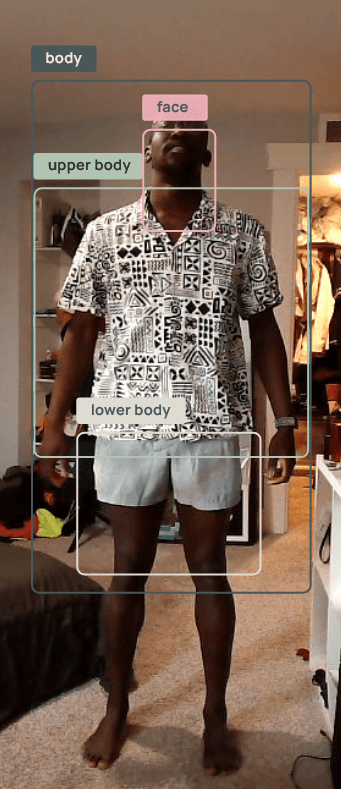
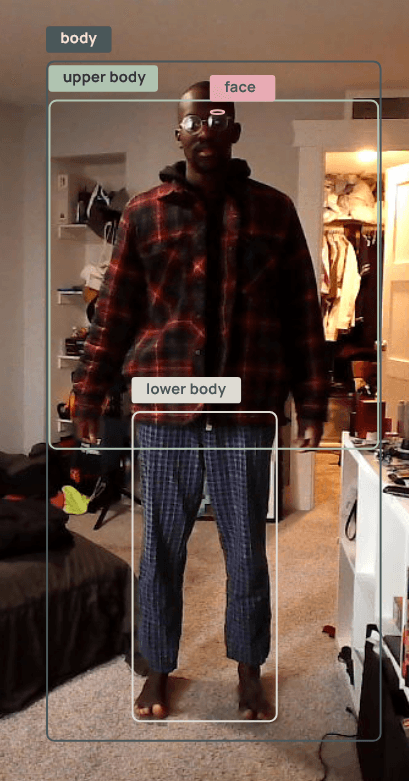
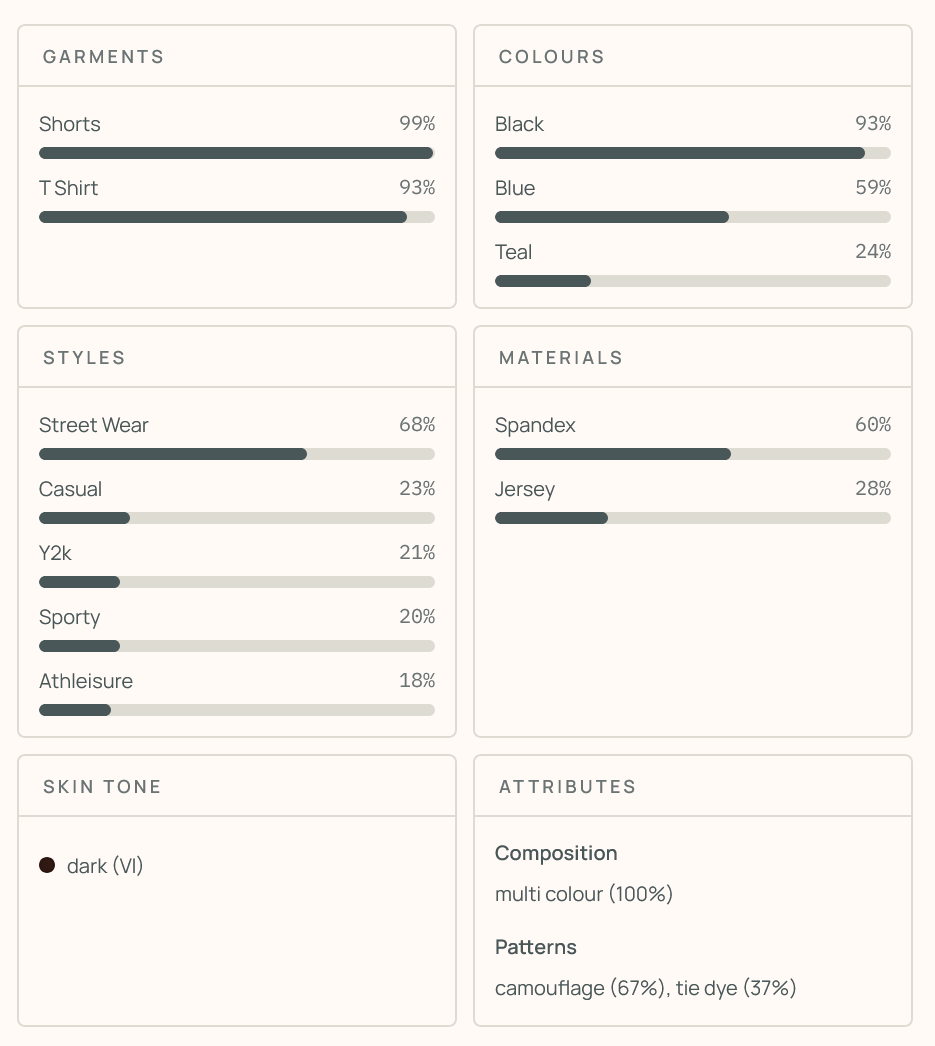
Fashion Vision looks at a clothing photo and pulls it apart. It segments the image into body parts. Upper body. Lower body. Face. Accessories. It crops the background out so the model sees only the garment. It fixes bad lighting. It extracts colors and clothing types and materials and styles.
The search layer uses RAG and embeddings. Wardrobe items become vectors. When you search for something similar, the system looks by likeness and context. Not keywords. Not tags. Just visual meaning. A red wool coat and a crimson peacoat live close to each other even if no one typed the same words.
I wanted the AI to feel first-class inside Fitr. Not bolted on. Not an afterthought. The decision engine runs on this service. It is the brain behind the outfit recommendations.
Why I Tried to Copy My Own Eyes
I wanted to understand what it takes to teach a machine to look at a photo and describe what someone is wearing. Not to build a product. Just to see if I could replicate how my own brain separates body from background and identifies garments.
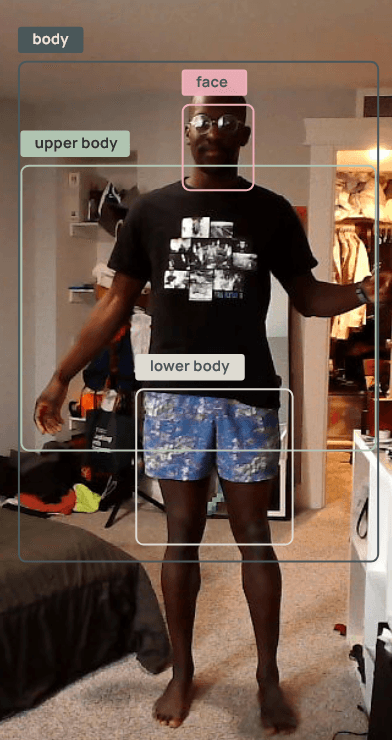
The real challenge was not running the models. It was making them work together on real photos with bad lighting and cluttered backgrounds. A segmentation model might find the body, but it also includes the face in the upper body region. So I needed to subtract the face mask from the upper body mask and validate hat regions by size.
Each stage depended on the last one working correctly. If the bounding boxes were off by even a few pixels, the classifier would see the wrong crop and give useless results.

The Pipeline I Built
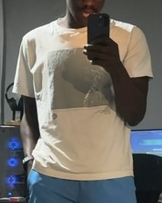
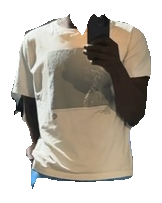
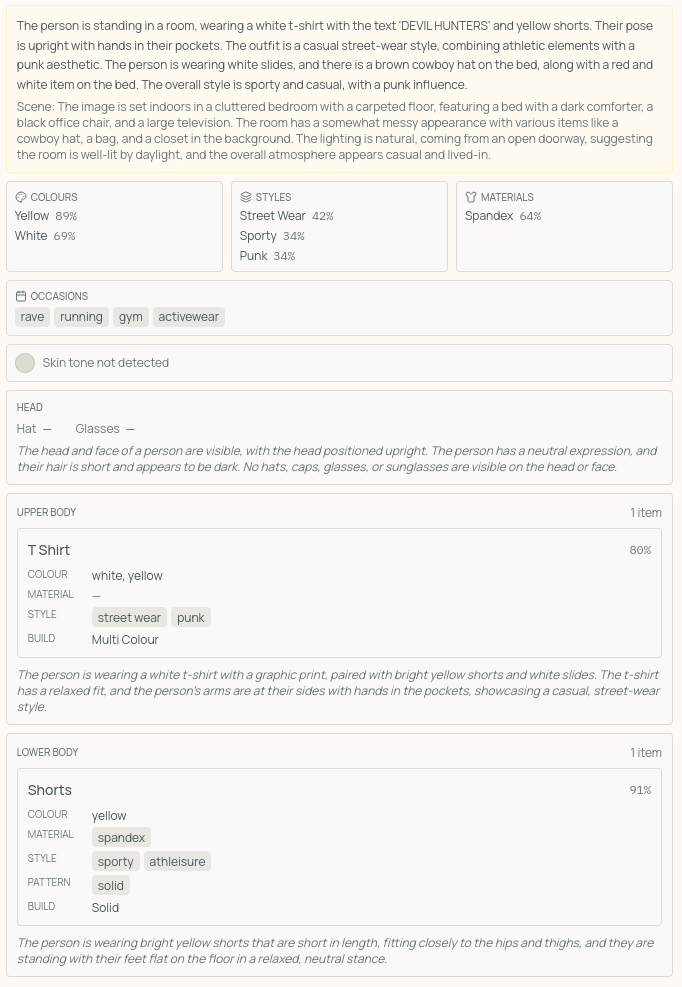
The pipeline runs in four stages. First, a segmentation model classifies every pixel into body parts like upper body and lower body and hair and accessories. From that mask I extract bounding boxes around where clothing actually lives. Then a second model isolates the face region because skin tone affects which colors work in an outfit. Next, each clothing section gets cropped with a transparent background. A classifier trained on fashion data recognizes a denim jacket much better when it sees just the jacket instead of a person in front of a brick wall.
The classifier uses zero-shot learning. Instead of predicting from a fixed list, it compares the image against text descriptions. "Denim jacket" becomes a vector in the same space as the image. Adding a new category just requires writing a text description. No retraining needed.
Running AI on a Budget
Cloud ML APIs are expensive. I wanted to keep development and production costs low. So I learned to run models locally.
ROCm on AMD GPUs. CUDA on NVIDIA. Local LLM concepts I had never touched before. I compressed models. I optimized pipelines. I made them run fast enough on hardware I already owned.
Everything executes in the browser or on the local server using Transformers.js with WebGPU acceleration. After warmup there is zero latency. No API costs. Complete privacy.
What I Learned About Edge Cases
I assumed the models would be the hard part. They were not. The hard part was all the glue code between them. Validating hat sizes and subtracting masks and merging results with a priority system felt like boring implementation details. But they are what separate a demo that works on perfect photos from something that handles the real world.
Every stage of this pipeline corresponds to something your brain does without effort. The fact that it takes four ML models and seven processing stages to approximate a few hundred milliseconds of human neural processing is humbling. Unusual poses and layered clothing and poor lighting are not bugs. They are the texture of the real world. Building something that works means respecting that texture instead of trying to smooth it over.